Be yourself; Everyone else is already taken.
— Oscar Wilde.
This is the first post on my new blog. I’m just getting this new blog going, so stay tuned for more. Subscribe below to get notified when I post new updates.
Throughout this semester, I have gained more knowledge about our society as a whole and about my ability to write in different forms. The assignments I found most entertaining were the major papers. I really felt like they challenged me to think differently and opened my mind up to many other thoughts and ideas. I also enjoyed the free-writes because it was a way for me to journal and find a creative space in writing. So far, at Chapman, this was one of my favorite classes because it was so different than all my other ones. I really enjoyed learning more about rhetoric from a college standpoint. In grade school through high school, we are taught rhetoric, however, in college it just felt different. I definitely have a better understanding of rhetoric and I this class has made me more aware of the way I speak, the way my family, peers on zoom, professors, and media speak. Rhetoric essential, like the businesses during COVID. Rhetoric exists everywhere and thats the beauty of each language. We can attach meaning through writing, visual representation, reading, speech, and more through our delivery and a situation.
To be completely honest, I am not sure if my writing has improved or not. I don’t really notice drastic changes in my writing because I am not too sure how to self-critique my own writing style. I have learned that I like to ramble. I try my best to avoid run-on sentences, but my brain has the tendency to just go, go, go, when I write. One assignment that I loved was the visual essay. Through this assignment, I discovered that visual representations are just as impactful as writing to me. As an individual, I think pictures hold such a powerful meaning to each and every person. This was eye-opening to me because I didn’t know that I would run with creativity as much as I did. Overall, I really enjoyed this class because of the way it challenged me to think about our society. We are literally, quite literally, living in a dystopia. Taking this class and simultaneously experiencing a moment in history will be something that I remember forever. As I self-reflect on this class and my time in quarantine, I realize how much I think about our society, our leader, human behavior, and how life will be in the near future. Are we heading into a new normal, or will we be returning back to a jam-packed 405 freeway and a work-oriented society? I would hope that after COVID-19 and this dystopian vibe, we look at life and consider the little things that are making us happy right now.
Thank you for such an enlightening class and semester! I am going to miss your creativity and humor, but more importantly, all the knowledge that you shared with me.
How is it that the nation we live in is a powerhouse economy, yet we rank 43rd in life expectancy in the world?What are we doing wrong and what can be done to change this? An issue we are facing is that we are simultaneously dealing a health crisis and political crisis. The health care system and our response to a pandemic is exacerbating the governmental and political climate in relation to health policy. Our nation is empowered and driven by wealth, thus if individuals don’t have the economic stability, they won’t be able to combat the health disparities that come with it. This is a problem because we are not valuing citizens, we are valuing business and the capitalistic society that surrounds us. We live in the United States of America; however, we are not anywhere close to what a united country should look like, and frankly, might never be. Globally, the health of individuals is the main topic right now. Viruses and their relation to health are currently having a strong influence on the actions each person takes whether it be with school, work, or daily errands. I am here to argue that there are disparities seen in minority and low-income populations across many health outcomes and this is due to the lack of security we have with our education and health system. I am not advocating for universal health care; however, I am arguing that health care should be seen as a right, not a privilege. We should create a space within communities and education systems to promote health care as a right and make resources more available to those in need.
We are, above all, entitled to our freedoms. However, this liberty is being challenged by the many different factors that make up our society. Although a powerhouse house country, disenfranchised individuals are still being affected by the social and economic factors that affect our health outcomes. This is a battle that not everyone faces, but it is prevalent amongst many communities across the nation and even across the globe. It is made aware to me that people are not aware of the health disparities that are being exacerbated by the coronavirus pandemic. In a recent news article the issue being presented surrounded the disparity seen amongst individuals living in New York (Pilkington and Ankita). This article discusses how the coronavirus has created two societies that are divided by socioeconomic status and race. The divide is seen to reflect the data of death rates and death figures in New York (Pilkington and Ankita). The author states, “Coronavirus may not discriminate but the outcomes do” (Pilkington and Ankita). This means that the outcomes of the disease are having different burdens based on other factors aside from the disease itself. The coronavirus is a threat to everyone; however, some people are more capable of practicing health promoting behaviors, like social distancing, buying healthy food at the market, or working out in their backyard. This is not the case for everyone in the United States and also around the world. Some people are still struggling to put food and water on the table, some are still rushing to work essential jobs, and some have underlying conditions associated with poverty and racism. These factors are all contributing to vulnerability to the disease and the related outcomes. This article highlights how health is seen as a privilege. It is inevitable that there will be social differences throughout our country, but this doesn’t mean that health inequities should coexist with social inequities.
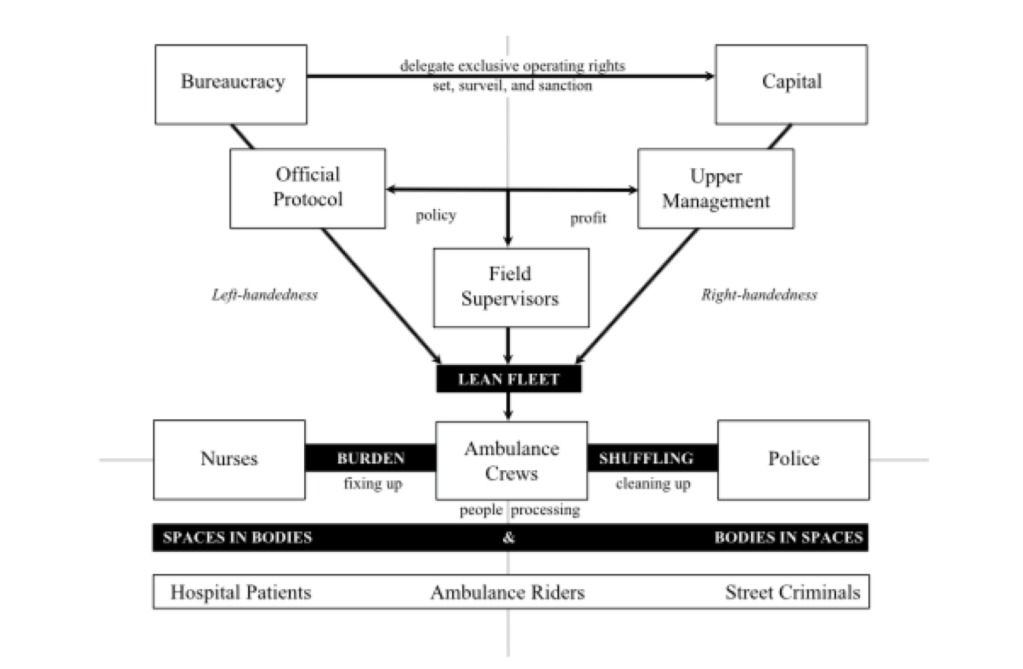
The health disparities seen throughout our country are explained in detail with an article about burden shuffling with ambulances and hospitals (Seim). The bureaucracy and capital are composed of upper management and supervisors that drive profit and create policies while the nurses, ambulance crews, and police are shuffling between fixing up patients and getting patients off the streets (Seim 460). This article explains how America’s sick-role is a part of a multi-dimensional process where poverty, disease, and deviance are seen as form of social control. This article shines the light on the disparities we see with health care based on socioeconomic status. There are horizontal and vertical components that work together to affect each other and the labor processes related to health and deviance. We are operating spaces in bodies and bodies in spaces. Spaces in bodies; where we treat individuals and their physical structure, and bodies in spaces; where we are, for example, moving a psych patient off the streets to protect others (Seim 452). Poverty governance is a social determinant and theory that is associated with our health care system. We need to create a different approach to change health care policy and profit. This can be done by taking action within the community to advocate for change in health education and promote awareness for those who lack the knowledge.
Health disparities across the nation are guided by an individual’s educational attainment. As an undergraduate student, I already have more leverage to have better health outcomes than others who aren’t receiving higher education. In a study done by Stanford University colleagues, data from the 2012 Medical Expenditure Panel Survey was used to measure physical health status, educational attainment, sociodemographic variables, and the access to or use of medical care (Kaplan). Their results of the average physical component score for both men and women were highest with those with graduate and bachelor degrees (Kaplan). This suggests that there is a systematic relationship between educational attainment and self-reported physical health scores (Kaplan). Overall, the access and use of health care is a direct reflection on the health-education gradient explained in the article. This is why it’s important to encourage a quality education because this can outweigh other social determinants in terms of promoting better health outcomes. In order to bridge the gap between low-income communities and health care, I think it’s important that we work closely with education systems and universities on health promoting behaviors that people can practice. The advice doctors provide to patients should be made aware to everyone.
To address the related health disparities in our country, we must address restructuring the education system. There are so many different situations in which we can make an impact to influence policy makers and the macro level structures. Advocating for health education programs creates and space for students of all levels to develop an understanding of health outcomes and educational attainment. Implementing health education into the education system brings more awareness to the social determinants relating to health. Creating places for students to learn more about how they can contribute to better health behaviors for themselves, also promotes student’s interactions in helping their families and the community they live in. Another far-stretched idea that could drastically change health disparities are offering medical resources to students and their families. Some students in both privileged and impoverished areas, look forward to school because it is their safe haven. If we could make this a place for students to be educated about their health as well, we could further reduce these health disparities and change the tide of health outcomes for future generations.
With an understanding that there may be constraints to do the governmental role in health care, I still think it is most important for health care workers to address the health disparities seen in minority and low-income populations. The ones who have a voice in health care policy aren’t always the ones who have had the hands-on exposure. This is why I believe healthcare workers should have more of a stance in health policy. So often we focus on the political climate with decision making rather than the facts and science that could benefit communities. As a society, it is important that health care professionals and medical experts advocate for the health of people rather than patients. Instead of treating each individual as a number, we need to treat each individual as a value to society. Overall, I think we all deserve an equal chance to maintain a healthy lifestyle and have the resources to do so. Even if these resources provide the minimum for low-income and disenfranchised communities, it is better than what we offer now.
Works Cited
Kaplan, Robert M., et al. “Educational Attainment and Health Outcomes: Data from the Medical Expenditures Panel Survey.” Health Psychology, vol. 36, no. 6, 2017, pp. 598–608., doi:10.1037/hea0000431.
Pilkington, Ed, and Ankita Rao. “A Tale of Two New Yorks: Pandemic Lays Bare a City’s Shocking Inequities.” The Guardian, Guardian News and Media, 10 Apr. 2020, http://www.theguardian.com/us-news/2020/apr/10/new-york-coronavirus-inequality-divide-two-cities.
Seim, Josh. “The Ambulance: Toward a Labor Theory of Poverty Governance.” American Sociological Review, vol. 82, no. 3, Apr. 2017, pp. 451–475., doi:10.1177/0003122417702367.
*This is in favor of a viewpoint/argument that I oppose and for my writing course*
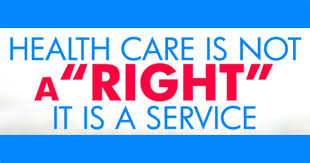
Healthcare is not universal; therefore, it is not a right to everyone. This has a direct influence on the health outcomes of individuals. We can either base healthcare on financial status or completely have a corrupt system. Our system depends on the ability for individuals to attain quality health insurance. This is a healthcare system that is reflective of the financial status of Americans, therefore, healthcare is seen as a commodity rather than a right. We are privileged to have health care. Health care is based on the survival of the fittest here in America. There are disparities in the economy, in social classes, and in different regions of the country, so it is inevitable that there will be disparities in healthcare. We have the freedom to choose what we want in life, and we still do have the freedom to choose a medical provider, however, freedom is not free. Society is not obligated to provide access to basic quality health care. All citizens are not created equal, so universal health care does not make sense for our society.
The safety of one’s neighborhood has a direct effect on health, but what will parents do to support their families? Health care isn’t the priority when there are other stressors in life. There is not much knowledge around the impact of universal health care in America because it is irrelevant. We are not obligated to receive quality health care, but we are to obey the 30 human rights listed in the Universal Declaration of Human Rights. Providing free health care to all is a bad idea because we already spend a higher percentage of GDP on health care than any other country. The health of our society is crucial, however, there are many other rights that are more essential in moving our country forward. Nowadays, individuals are running with emotions instead of basing their knowledge off of facts. This explains why some may think that they deserve premium health care service even though they lack the insurance and financial security. Just as it is our responsibility to seek our own opportunities, it is our job to do our best to prevent non-communicable diseases such as diabetes, from arising without depending on our health care providers.
If America were to transition to government-based health care, they would not be able to handle to overload of patients in hospitals, leading to a burden on health care providers to treat every single person in this country. Health care developed as a privilege and as something that was available to only those who could afford it. We are fortunate enough to have the technology and resources that promote our health and well-being. Health care is not a flagrant disregard to human rights because it does not justify humanity. Although there is a moral principle to treat patients, there is no guarantee that care is equal across the board. We have the right to good health, but that doesn’t necessarily mean that we have the right to universal healthcare. Good health comes with many other outside factors than just quality health care. Overall, I believe health care is a privilege, not a right to all American citizens.
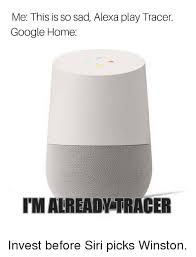
Orwell’s vision of the telescreen, which invades Winston’s home, becomes a reality in our home with the majority of the electronic devices people own. We are always being tracked whether it be through our GPS, through the camera of our computers or iPhones, or even with the media that we use. If I was blatantly told that the devices I use are tracking me, I would be more cautious and concerned about my privacy. I probably would give every move I make on my electronic devices a second thought because I would not be able to tell when I was being listened too. This is a crazy social phenomenon to me where we are all so immersed and reliant on our technology. We have evolved into completely different individuals because of how much out generation relies on our devices. Dependent, independent individuals we have become, where our independence is being challenged by our dependence.
Technology isn’t a one-way street; we receive information from our devices while strangers are receiving information about us. There are so many advantages to technology such as providing us with a platform to communicate with friends, creating a space for us to connect with others for our career (LinkedIn), and allowing us to retrieve instant information through google. There are also advantages of technology in that certain devices offer better learning techniques such as online classes, online programs, Ted talks, etc. However, the news, social media, and products like Google Home or Alexa can be disadvantageous when it comes to using our data to market and using the search engines to cater to our interests. This particular vision, as it relates to today’s society, is a disadvantage in regard to mental and physical health. We are all consumed by our devices to the point where screen time takes up a several hours of the day. With transitioning to online classes and with being at home, my screen time has almost doubled from being 4 hours a day during the beginning of the semester, to about 7 hours a day. The amount of time that I dedicate to my devices, makes it inevitable that the government or technology companies will use my data to extract information about me. The use of our information puts our individualism and privacy in jeopardy and fails to acknowledge that we have our independence and freedom. The idea of giving up my privacy for the security and safety of our country makes me realize that freedom is not free after all. I would not want to give up all of my privacy for the safety of our country because that defeats the purpose of our individuality. Overall, Orwell’s vision challenges us to think about ourselves within today’s society. I do not think it is ethical for us to be constantly monitored to ensure our country’s safety, however, we have all fallen victim to the control and manipulation that comes with our electronic devices.
The music video I watched and am choosing to analyze is Up&Up by Coldplay. I chose this music video because I recognized that the band and directors of the music video employ a variation of rhetorical devices in reference to one common theme. The author is focusing on a particular situation with humanity and the way that we view the world. This is relevant to our society because we can all relate to one another and the situations that arise around us. The main message to this music video is that we are capable of doing anything and achieving our goals through our thoughts. Although simple, this music video portrays powerful messages in relation to mother nature and past events. The music video emphasizes the motion of environmental, social, and political issues through different scenes. It highlights both a dystopian and utopian perspective of how we can relate to the world around us. Our impact is greater than just ourselves, and through the music video, the creators show that no matter what gender, ethnicity, or culture, we must look after humanity and do our part to create an optimistic space for people to live. Coldplay uses a specific tone and voice in this song that promotes a sense of relaxation and confidence. Through pathos and the use of rhetorical devices, Coldplay develops an emotional connection with the audience in reminding all individuals that there’s a bright side to many parts of life if we believe that.
In the music video, the song and language devices play a huge role in my analysis. Some rhetorical devices that I recognized while listening were imagery, metaphors, and personification. Visual imagery is used when Chris Martin says, “See a pearl form, a diamond in the rough” and “Angels in the marble waiting to be freed,” they are painting a picture for us using visual scenes and graphic explanation. The music video relates to the visual imagery that the lyrics provide as the scenes in the music video relate to the visual scenes of the lyrics. These two examples of visual imagery in the song show that the singers are encouraging themselves to break through the obstacles in their journey. Seeing a pearl form, a diamond in the rough means that we are all performers on this very Earth. Many individuals may not have reached their full potential and regret the chances they never took which represents a “diamond in the rough”. A metaphor that first struck my mind when listening to the song and watching the music video was the first line, “Fixing up a car drive in it again.” This is a metaphor because it is a figure of speech applied to an object that is symbolic of something else. Fixing up a car and driving in it again is a reflection healing yourself from something toxic or destructive in your life. We are all able to get back up from something that start fresh if we believe in recovery and healing. The last rhetorical device that relates back to a message for humanity is seen in the lyric, “underneath the storm an umbrella is saying sitting with the poison takes away the pain.” This line attributes a personal trait to something non-human, an umbrella’s reaction to the rain. This line is effective because it provides an example of how if we weather the storm and prepare for the worst, our version of the worst may not even happen as facing adversity may not be as hard as expected.
To incorporate a reassuring and peaceful voice, the singers used repetition and rhymes as a part of their song style. In reference to repetition, “it’s in your blood,” the song title itself is called “Up & Up,” and “gonna get it, get it together,” are all repeated throughout verses. The importance of repetition is to place emphasis on the main themes of the song. For example, the repetition of “Up & Up” is a constant reminder to us that we are in control of our life and in seeking happiness. To make the song a bit more poetic, Coldplay incorporates rhymes like, “moon and spoon,” “part and heart,” and “seed and freed.” Rhyming is a simple, yet impactful tool that we utilize to create patterns and musicality. With this upbeat, relaxed song, the factor of rhythm and beat play a role in the effectiveness of the song’s purpose. Overall, Coldplay was very successful in purveying their purpose through their rhetorical techniques and the music video was an accurate depiction of this.
On the surface, viewers may see the music video as a creative and imaginative piece, however, when you dive into each scene and analyze the relationship, there is a pattern that the creators developed in relationship to the lyrics. The music video shows different scenes that relate back to Apollo 11, the Vietnam War, human rights, social phenomenon’s, global warming. Some examples of scenes and their representations are shown with a car driving around Saturn. These scenes of the car racing around Saturn, the Apollo 11 moon landing, and more, are presupposed progress of human discoveries in science and technology. The scenes relating to science and technology are a depiction of all the great milestones in the history of exploration, shedding light on our capabilities and discoveries. Another interesting theme in the music video related to the history of human war and the disregard that our generation has about it. The powerful scene of the girl doing backflips into a bomb refer to the Vietnam War. However, the purpose was not to portray war, but to show what arose after war; hippy culture and anti-war thoughts. We continue to move up and up as a society however there are still issues that we deal with as a society. He illustrates the social phenomenon and human rights through the juxtaposition of people and environments. A notable scene that touches on human rights is when an African American is jumping over the Washington Monument, signifying the step towards African American rights. There is also a scene where a car is speeding over the New York skyline, showing the social phenomenon of overcrowding and traffic in densely populated areas. There is a representation of global warming in another scene where a McDonalds cup is blocking the entire water flow of a river. This touches on pollution around the world, specifically towards our marine environment.
Overall, all of these representations contribute to the bigger meaning of perspective. This music video was intended for the entire nation, and even world to watch. Coldplay’s main purpose of this music video was for people to connect to the surrealism of each reworked scene. This music video expressed the many different attitudes that individuals have about the world, however, the main message remained the same that we should never give up for what we fight for. We should continue to encourage ourselves and others to take on new perspectives of our world.


If you really want to talk about lies, let’s talk about this one. I would always hear the saying, “sticks and stones will break your bones but words will never hurt you.” That is probably the biggest lie ever. I remember someone jokingly telling me I had “thunder thighs” in middle school. Although a joke, those words stuck with me and hurt me as a young, innocent tween. Words do, in fact have power. Words also do, in fact hurt. This was just one example in the early stages of my life. They’re an art and have built the foundation of communication, expression, languages, and reading. I have come to realize that my relationship with language and composition is more than just pen to paper. It has evolved from being a set structure taught in grade school through high school, to a way of expressing who I am and what I am thinking. Writing is like a wave. Thoughts will come naturally and then go but have some power and force to it to create something special.
When I was an adolescent and through high school, my perception of writing was, “respond to this prompt” or “intro must have thesis, and essay should be five paragraphs”. This is all bullshit to me now. Don’t get me wrong, I think the structure is important to understand in terms of an individual’s flow of writing, but writing should be exciting and personal. Writing was a timed masterpiece created for a grade when it really should have been a masterpiece created for my own personal success. The influences I had in writing throughout middle school and high school have helped me in terms of flow, but did not allow me to understand that it was an art allowing me to expand on my intellectual thought.
When I got to college, I started to discover who I was and that words have so much power. I also experienced more hurt through words, proving that saying wrong once again. I was hurt in different ways; through communication with friends, through an unforgiving professor, and through my coach. But one thing I think remained constant, was my ability to write about my feelings, values, and opinions. I realized this in college when I was a freshman, going through a difficult time with my basketball coach and adjusting to being squeezed into a small room with two others. I discovered my journal, grabbed my pen, and allowed myself to be vulnerable to the paper. This was just one ever changing moment where I discovered that words have the power to hurt you, but also have the power to heal you. I took a creative writing class in college, and during that semester, I also realized that all my works of art depicted my sentimental feelings during that semester. My journey with words has been all about discovery. I find it so amazing that we have the power to influence others with our words just as others have the power to impact me. I see writing as a platform for myself to voice my opinion, entertain, and let go of feelings, like hurt.
Friend: Whatsup girl! Since I trust you and confide in you, I just wanted to let you know I dropped out of school this week because I can’t stand the schedule. It was just way too overwhelming and I think I want to spend the rest of my time traveling the world. Life has just become too hectic with school, I hated my professors, and I don’t even know what I want to do so I feel like the best bet was to just drop out and withdraw from my classes. I remember us talking about our future, our life with our boyfriends, and basically everything else. I never opened up to many people but I remember always mentioning to you how school was never my thing. That’s why I feel like out of everyone, I wanted you to know first. I also haven’t told my parents yet so I’m still in the process of figuring that out. Love ya!
Parents: Hi mom and dad. I just wanted to let you know that I decided to drop out of school here at Chapman because I couldn’t keep up with the busy schedule. I understand this is probably something I should have talked to you two about beforehand, but to improve upon being self-reliant and self-sufficient, I thought it would be best to make the decision on my own. I enjoyed the majority of my time here, however, my mental health was turning me away from being enrolled as a student. Class time and homework time were taking over my life, and I felt that I had no time to even consider my friends, boyfriend, or our family. I want to be able to share with you everything about this decision once I get home and move out because I have a plan for myself. Part of that plan being that I will work my hardest to try to pay you both back the tuition and money that was wasted. You can give me a call whenever you guys get this message.
Coach: Hi Coach! I hope this message finds you doing well. I wanted to reach out to you because I have made the decision to drop out of Chapman due to the stressful and busy schedule I had. I was overwhelmed and unproductive for the majority of the time. I wanted to inform you about this decision since you have always had an impact on my life in one way or the other. I am learning more about myself each and every day and felt that dropping out was the most ideal situation for my happiness. You constantly reminded me that being happy, feeling proud of yourself, and acts of kindness in life are all key aspects of fulfillment. Since I have always kept that at the back of my mind, I wanted to see if you were free anytime soon to grab coffee and hear your insight and advice. I have always looked to you since you have had a lasting impact on my life outside of school. I look forward to hearing from you!
This is an example post, originally published as part of Blogging University. Enroll in one of our ten programs, and start your blog right.
You’re going to publish a post today. Don’t worry about how your blog looks. Don’t worry if you haven’t given it a name yet, or you’re feeling overwhelmed. Just click the “New Post” button, and tell us why you’re here.
Why do this?
The post can be short or long, a personal intro to your life or a bloggy mission statement, a manifesto for the future or a simple outline of your the types of things you hope to publish.
To help you get started, here are a few questions:
You’re not locked into any of this; one of the wonderful things about blogs is how they constantly evolve as we learn, grow, and interact with one another — but it’s good to know where and why you started, and articulating your goals may just give you a few other post ideas.
Can’t think how to get started? Just write the first thing that pops into your head. Anne Lamott, author of a book on writing we love, says that you need to give yourself permission to write a “crappy first draft”. Anne makes a great point — just start writing, and worry about editing it later.
When you’re ready to publish, give your post three to five tags that describe your blog’s focus — writing, photography, fiction, parenting, food, cars, movies, sports, whatever. These tags will help others who care about your topics find you in the Reader. Make sure one of the tags is “zerotohero,” so other new bloggers can find you, too.
Have a WordPress.com account? Log in now.

